
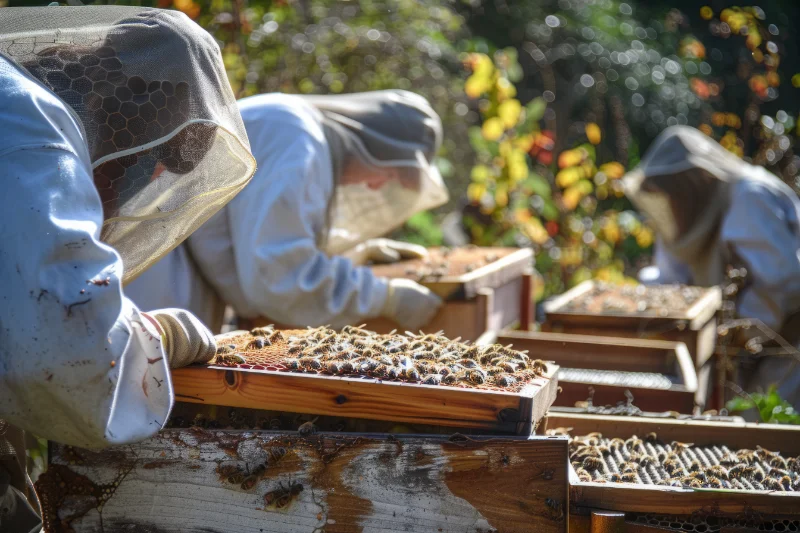
Modern beekeeping is no longer just about producing honey—it is about protecting pollinators, preserving ecosystems, and building a future where bees can continue to thrive. Sustainable beekeeping practices are essential for every beekeeper who wants to balance productivity with environmental responsibility.
One of the most important principles of sustainable beekeeping is maintaining strong, healthy colonies. This starts with providing bees with a safe habitat free from harmful pesticides and pollutants. Placing hives near diverse flowering plants ensures a continuous nectar and pollen supply, which supports colony strength and improves honey quality.
Responsible hive management also means avoiding overharvesting. Bees need enough honey stores to survive colder months and periods of nectar shortage. Taking only the surplus protects colony health and reduces the need for artificial feeding, making the process more natural and sustainable.
Another key practice is supporting local biodiversity. Beekeepers can plant bee-friendly flowers, native plants, and flowering trees around their apiaries. This not only improves forage opportunities but also benefits wild pollinators and strengthens the surrounding ecosystem.
Integrated pest management is another sustainable approach. Instead of relying heavily on chemicals, modern beekeepers use monitoring systems, drone brood removal, screened bottom boards, and organic treatments to control pests like varroa mites. These methods reduce chemical exposure while keeping colonies healthy.
Sustainable beekeeping also includes responsible breeding and queen management. Selecting queens from strong, disease-resistant colonies helps improve genetics and reduces colony losses over time. Healthy genetics mean bees are naturally better equipped to adapt to environmental challenges.
Eco-friendly packaging and product handling are also becoming increasingly important. From reusable glass jars to recyclable labels, sustainable product presentation aligns with the values of ethical honey production and appeals to environmentally conscious customers.
By following sustainable beekeeping practices, modern beekeepers play a crucial role in protecting one of nature’s most important pollinators. The result is healthier bees, better honey, and a stronger connection between beekeeping, agriculture, and environmental care.